 Skip to content
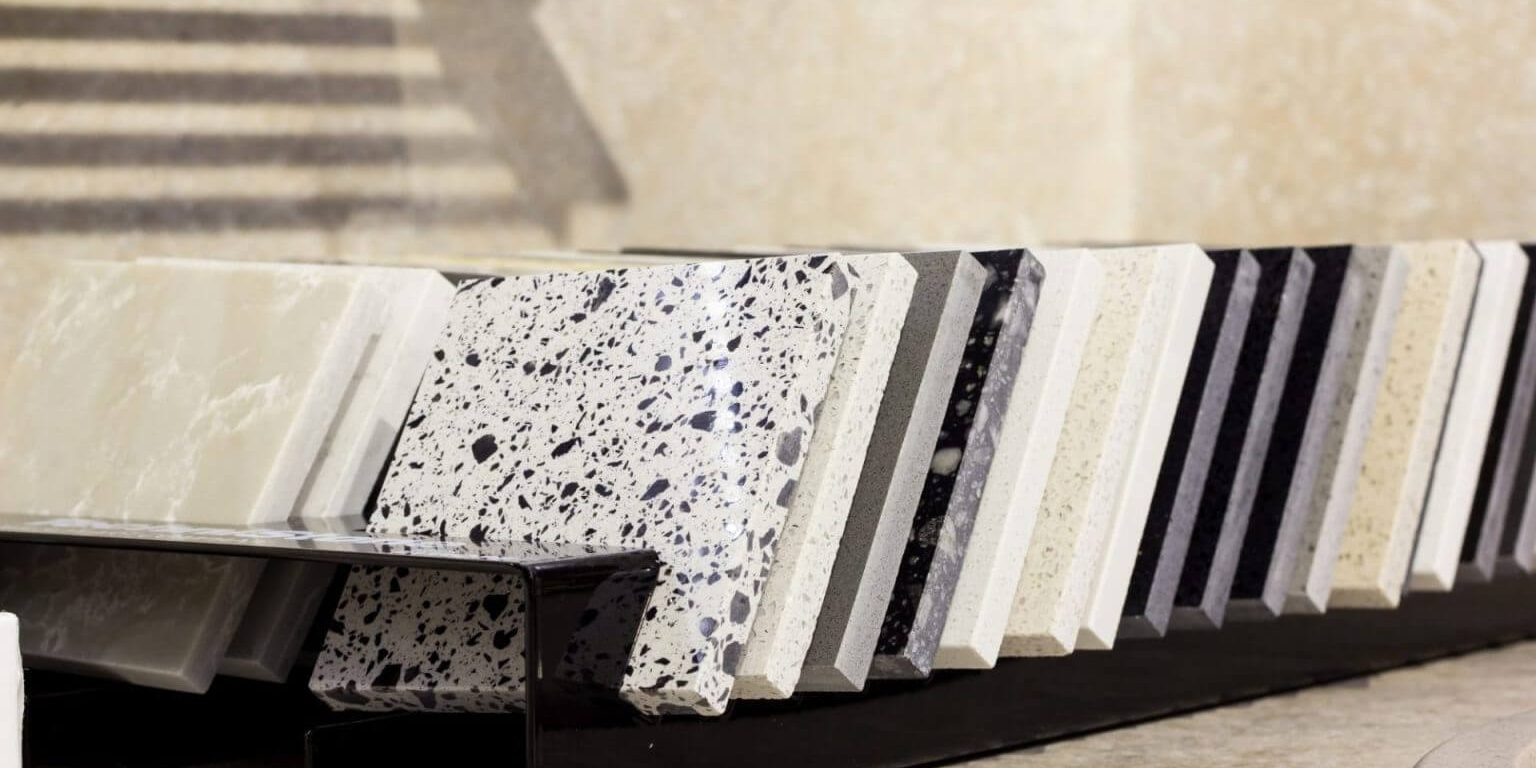
Your kitchen worktop is one of the hardest-working surfaces in your home. It is where food is prepared, where children do homework, where coffee is made at 7am and wine is poured at 7pm. It needs to be durable, practical and beautiful in equal measure, and it needs to stay that way for many years.
With a wider range of worktop materials available than ever before, choosing the right one is genuinely worth taking time over. The best choice depends not on which material is objectively superior, but on which one suits your lifestyle, your aesthetic preferences and the demands of your specific kitchen.
This guide walks through the main worktop material options and what each one offers, so you can approach the decision with clarity and confidence.
Engineered Quartz
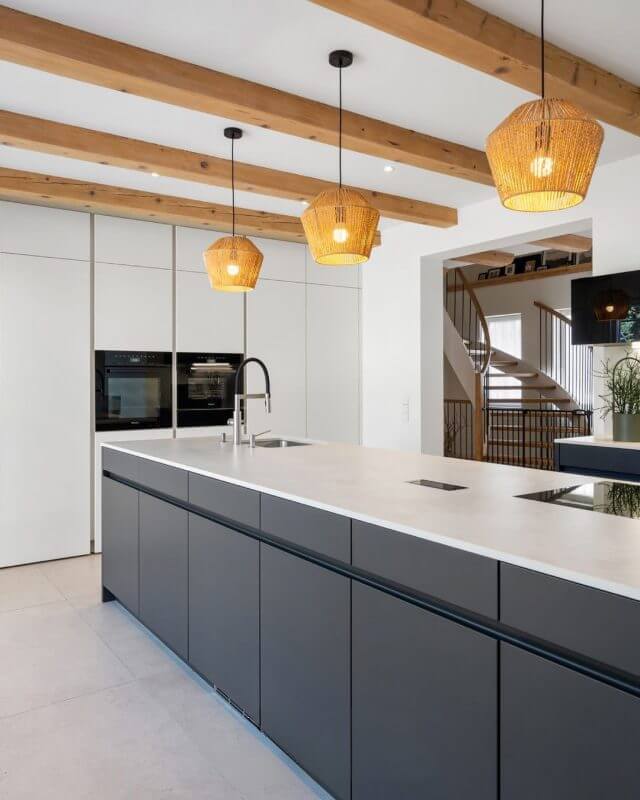
Engineered quartz is the most widely specified worktop material in premium kitchen design, and for good reason. It combines the visual richness of natural stone with a non-porous surface that is highly resistant to staining, bacteria and everyday wear.
Quartz worktops are available in an enormous range of colours and finishes, from crisp white and pale grey to deep tones and marble-effect patterns. Because the surface is engineered, the appearance is consistent throughout the slab, without the natural variation of stone.
It is important to note that quartz is not completely indestructible. It can be chipped at edges under significant impact and is not entirely heat-proof, so trivets and pan stands are advisable. It requires professional fabrication to ensure safe cutting practices are followed, which is why Tolle Kitchens works only with trusted worktop specialists who adhere to responsible fabrication standards.
Quartz is an excellent choice for busy family kitchens where practicality and low maintenance are priorities.
Granite
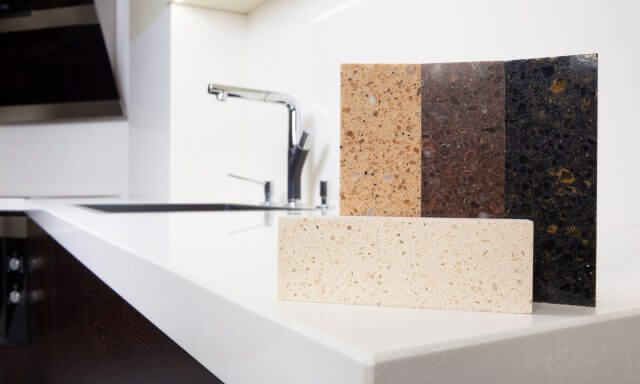
Granite is a natural stone that offers a depth of character and uniqueness that cannot be replicated in an engineered material. Every granite slab is different, with its own pattern of minerals and natural variation that gives a kitchen a genuinely distinctive surface.
Granite is extremely hard and scratch-resistant, and handles heat well. It does require sealing on installation and periodic resealing to maintain its resistance to staining, but for many homeowners this maintenance is a small price to pay for the beauty and character of the material.
Granite suits both contemporary and traditional kitchens. It is particularly well-suited to Yorkshire period properties where the natural character of the material feels at home alongside original architectural features.
Porcelain and Sintered Surfaces
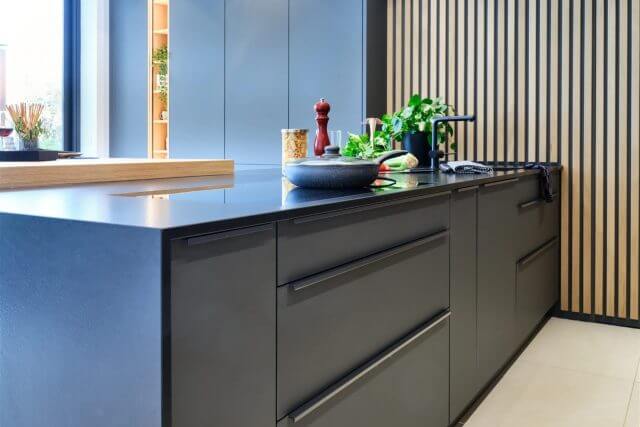
Porcelain and sintered surfaces such as Dekton represent some of the most technically advanced worktop materials available. They are made under extreme heat and pressure, producing a surface that is exceptionally hard, completely non-porous, UV-stable and highly resistant to heat, scratches and staining.
Dekton in particular has become a popular choice in premium kitchen design, particularly for outdoor kitchen spaces and for clients who want the visual language of stone without any of the maintenance considerations. It is available in a wide range of finishes including convincing marble and concrete effects.
The trade-off is that sintered surfaces are less forgiving of significant impact than some alternatives and require precise, specialist fabrication. They also sit at the higher end of the price range.
Natural Stone: Marble and Limestone
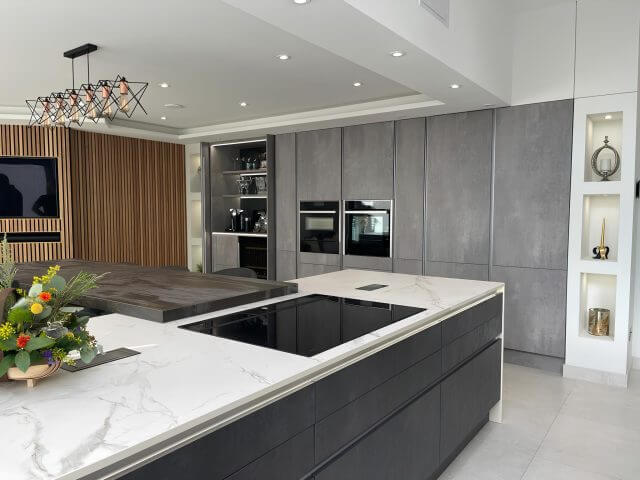
Few materials match the visual luxury of natural marble. Its characteristic veining and translucent quality give a kitchen an extraordinary sense of depth and refinement. For clients who want a kitchen that makes a genuine visual statement, marble is hard to surpass.
It is, however, the highest-maintenance worktop material on this list. Marble is porous, susceptible to etching from acidic substances such as lemon juice and vinegar, and marks relatively easily. For homeowners who are prepared to maintain it with care and accept its natural patina as part of its character, it can be a deeply rewarding choice. For families with young children or high-demand cooking environments, it may not be the most practical option.
Limestone offers a similar aesthetic quality to marble with slightly different maintenance characteristics. Both are worth considering in the right context.
Solid Wood and Timber
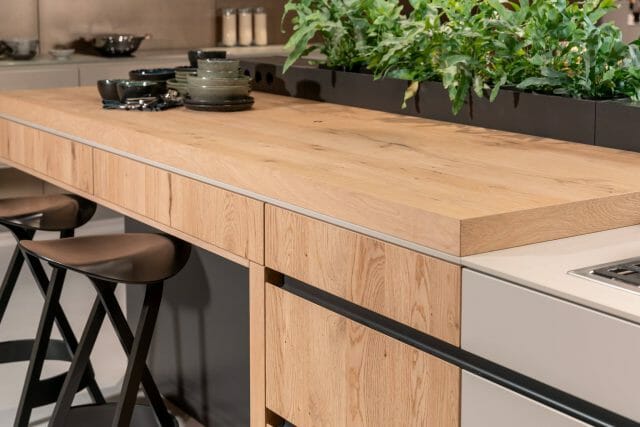
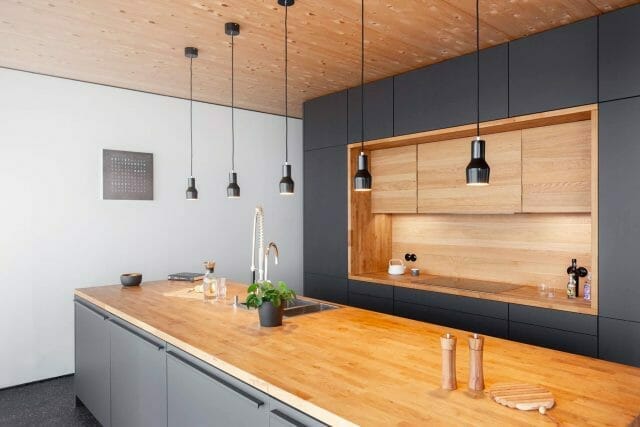
A solid timber worktop brings warmth, texture and a sense of natural craftsmanship to a kitchen that stone and engineered surfaces cannot quite replicate. It is particularly well-suited to traditional and Shaker-style kitchens, where it complements the cabinetry beautifully.
Timber is not without its demands. It requires regular oiling to maintain its condition and must be protected from standing water. It will develop a patina of use over time, which some homeowners find part of its charm and others prefer to avoid.
A practical approach used by many of our clients is to combine timber with another material: a timber breakfast bar or island top paired with a stone or quartz preparation surface, for example. This delivers the warmth of wood where it is appreciated aesthetically while keeping the primary cooking surface practical and low-maintenance.
Compact Laminate
Modern compact laminate worktops have come a long way from the melamine surfaces of earlier decades. High-quality compact laminate is available in a wide range of finishes that convincingly replicate stone, concrete and wood, and at a price point that is significantly more accessible than the natural materials they reference.
For clients who want a beautiful worktop within a tighter budget, or for secondary surfaces in utility rooms and larder spaces, compact laminate is worth serious consideration. At Tolle Kitchens, we can advise on the options available and help you understand where the trade-offs lie.
Choosing What Is Right for You
The right worktop material is the one that works best for your life. Our designers will take the time to understand how you use your kitchen, what your aesthetic priorities are and what your budget allows, and then recommend options that genuinely suit you rather than simply suggesting the most expensive choice.
You can explore worktop options in person at our Beverley showroom or our Halifax showroom, or book a free design consultation to begin the conversation. We serve clients across Yorkshire including Leeds, Huddersfield, Wakefield and beyond.
FAQs
Which kitchen worktop material is the most durable?
Sintered surfaces such as Dekton are among the most technically durable worktop materials available, offering exceptional resistance to heat, scratches, UV and staining. Granite and engineered quartz are also highly durable for most domestic applications. The right choice depends on how you use your kitchen and your aesthetic preferences.
Is quartz or granite better for a kitchen worktop?
Both are excellent choices. Quartz is non-porous, requires no sealing and is available in a consistent range of colours and finishes. Granite is a natural stone with unique character and variation, handles heat well and develops a natural patina over time. The best choice depends on your aesthetic priorities and maintenance preferences.
Are marble worktops practical for everyday use?
Marble is a high-maintenance material that is susceptible to etching from acidic substances and marks relatively easily. It can be a rewarding choice for homeowners who are prepared to care for it and appreciate its natural patina. For high-demand family kitchens, it may not be the most practical primary surface.
Can I mix worktop materials in my kitchen?
Yes, and this is a popular approach. Combining a durable stone or quartz preparation surface with a timber island or breakfast bar, for example, allows you to enjoy the aesthetic benefits of timber where it matters visually while keeping the primary cooking surface practical and low-maintenance.
How do I choose a worktop material at Tolle Kitchens?
Our designers will discuss your lifestyle, aesthetic priorities and budget as part of your design consultation and recommend worktop options that genuinely suit you. You can see and handle samples in person at our Beverley and Halifax showrooms, or book a free consultation at tollekitchens.co.uk/design-consultation.