 Skip to content
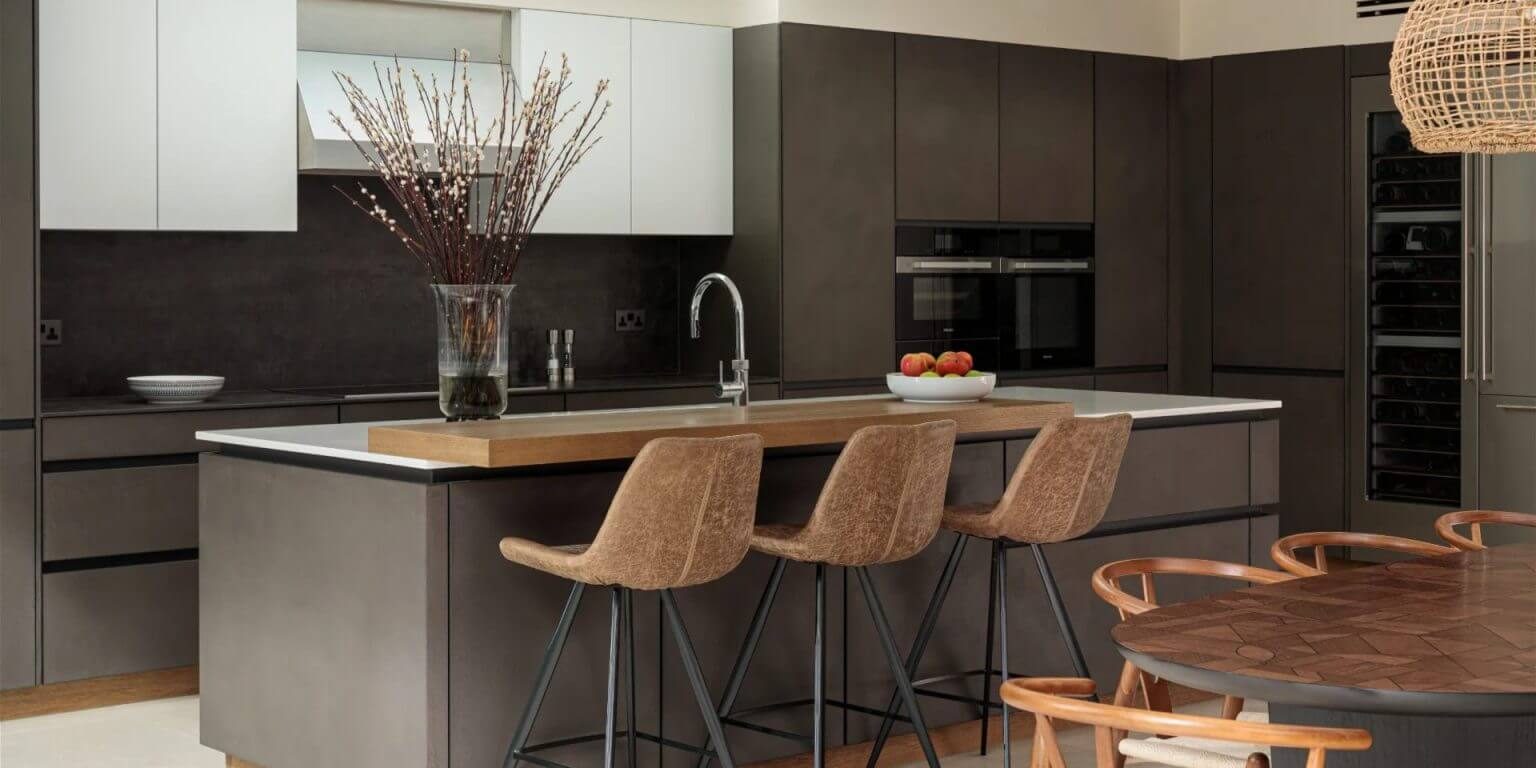
Across Yorkshire from the stone-built Georgian townhouses of Harrogate and the converted barn properties of the Dales, to the modern new builds of Ilkley and the period homes of Beverley open-plan living has become one of the defining home renovation trends of recent years. Walls come down, spaces expand, and the kitchen moves from the back of the house to its very centre.
It’s an exciting transformation but it also brings with it some very specific design challenges. When a kitchen is no longer a self-contained room, every decision you make carries more weight. The layout, the finishes, the lighting, the way the space flows all of it needs to be considered in the context of the whole.
At Tolle Kitchens, with showrooms in Beverley and Halifax, we work with Yorkshire homeowners every day who are planning exactly this kind of project. Here’s what we’ve learnt about getting open-plan kitchen design right.
Start With the Architecture
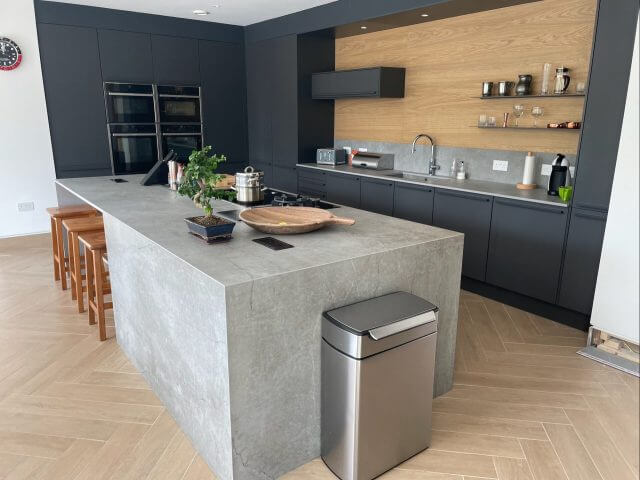
Before a single door handle is chosen, it’s worth taking time to really understand the architecture of the space you’re working with. Yorkshire properties vary enormously from the low ceilings and thick stone walls of a rural farmhouse to the high ceilings and large sash windows of an Edwardian semi. Each brings its own opportunities and constraints.
In period properties, the original character of the building can be a real asset. Exposed beams, original fireplaces, or distinctive brickwork can all be worked into an open-plan design in a way that adds warmth and authenticity rather than fighting against the new contemporary kitchen. The key is to design the kitchen as part of the whole room, not as a separate entity dropped into it.
In newer properties, or those that have been significantly altered, the challenge is often more about proportion creating a kitchen that feels anchored and resolved within a potentially large, open space. This is where layout planning and the intelligent use of cabinetry become critical.
Defining Zones Without Walls
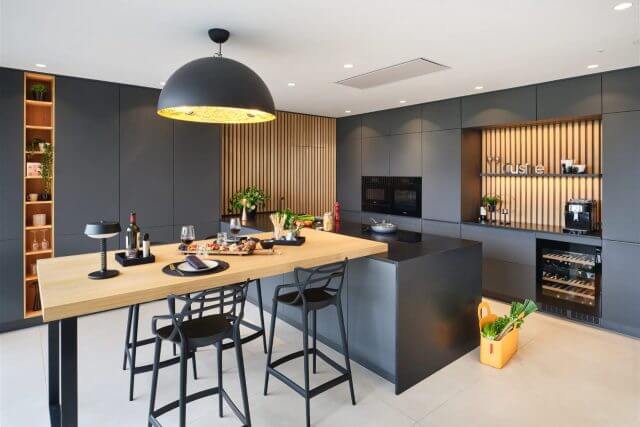
One of the most important design tasks in an open-plan space is creating a sense of definition between zones kitchen, dining, living without relying on physical partition walls. Achieving this well is what separates a space that feels considered and calm from one that feels busy or unresolved.
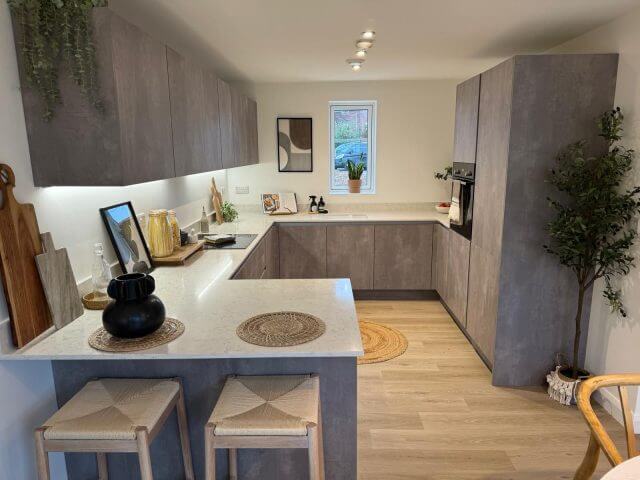
There are several effective ways to approach this. A kitchen island is one of the most powerful tools it creates a natural boundary between the cooking area and the rest of the room, whilst also providing additional worktop space, seating, and storage. For many of our Yorkshire clients, the island becomes the true social heart of the home, a place to gather around during both busy weekday mornings and relaxed weekend evenings.
Changes in floor material or ceiling height can also quietly delineate zones. In some open-plan spaces, a dropped or raised ceiling over the kitchen area or a change from engineered oak flooring to stone or large-format tile signals the shift from one area to another without the need for any physical barrier.
Lighting plays a similarly powerful role. A pendant cluster above the dining table, under-cabinet lighting in the kitchen zone, and softer ambient lighting in the living area each create distinct atmospheres within a single space. You can explore our Zuma Lighting range for options that integrate beautifully with premium cabinetry.
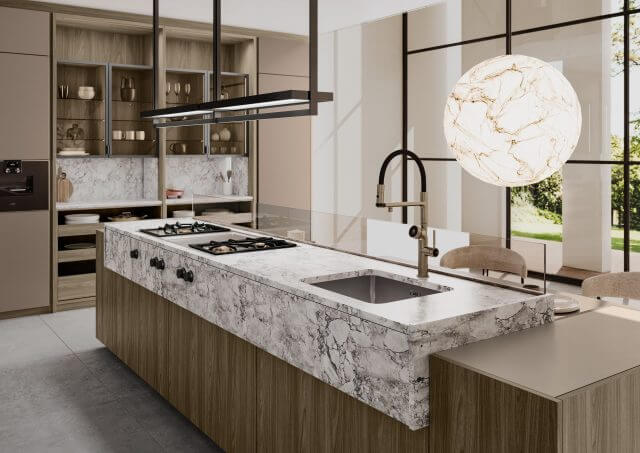
Choosing a Kitchen Style That Works With the Wider Space
When a kitchen is open to a living or dining area, the visual language of the cabinetry needs to feel intentional rather than isolated. A handleless contemporary kitchen that feels perfectly at home in a clean, modern interior might feel jarring in a space with original period features and warm, tactile furnishings and vice versa.
At Tolle Kitchens, our range covers the full spectrum. Our contemporary handleless kitchens are beautifully suited to modern and transitional interiors, offering clean lines and a quiet sophistication that wears well over time. Our Classic Shaker range brings warmth and character to period or rural settings, whilst our in-frame kitchens offer a level of craftsmanship and detail that stands out in the most significant spaces.
The finish palette also matters enormously in an open-plan context. Tonal layering using complementary shades across cabinetry, walls, and soft furnishings creates cohesion across the whole space. Rich, warm neutrals have been enormously popular with our Yorkshire clients in recent years, particularly finishes such as deep taupe, clay, and the mocha tones that continue to define contemporary kitchen design in 2025 and beyond.
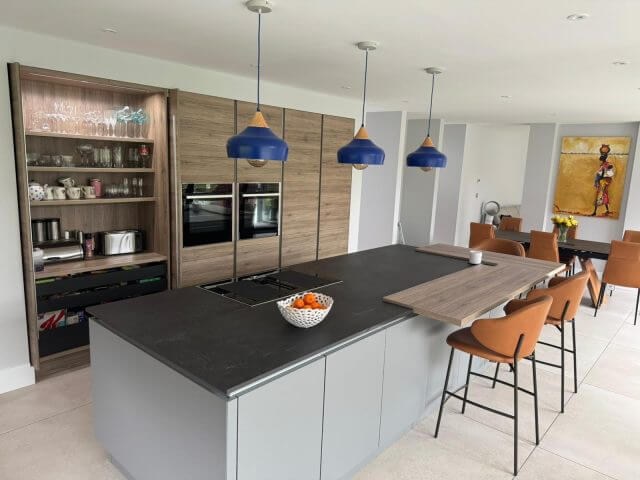
Appliances That Disappear and Others That Become a Feature
In an open-plan kitchen, how you handle appliances makes a real difference to the overall aesthetic. For the most seamless result, many of our clients opt for fully integrated appliances oven, fridge, dishwasher, and more hidden behind cabinetry that matches the rest of the kitchen. This approach keeps the visual landscape clean and uncluttered, which is particularly valuable in spaces where the kitchen is visible from multiple angles.
As a NEFF 5 Star MasterPartner, we have access to the full NEFF appliance range including their outstanding integrated ovens, steam ovens, and induction hobs all of which can be specified to integrate perfectly with your cabinetry. For clients who entertain regularly, NEFF’s Slide&Hide oven and their range of flex induction technology are consistently among the most appreciated features in a finished kitchen.
At the other end of the spectrum, some clients choose to make certain appliances a deliberate feature a range cooker that becomes a focal point, or a Quooker tap in a statement finish that catches the eye. Both approaches can work beautifully; the key is that the decision is made deliberately, as part of the overall design vision, rather than by default.
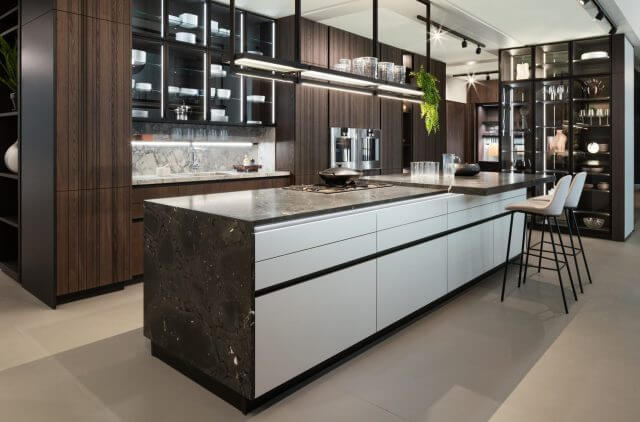
Managing Noise and Practicality in an Open Space
Open-plan living is wonderful for connection and sociability, but it does require some thought around practicality. Kitchens are working environments extraction, appliance noise, and cooking smells all need to be managed carefully when there are no walls to contain them.
Extraction is a critical consideration. A high-quality, well-specified extractor ideally ceiling-mounted or integrated into a ceiling cassette above an island will handle cooking odours efficiently without being intrusive. We work with our clients on appliance specification from the outset to ensure extraction is both effective and appropriate for the space.
Storage design also becomes more important in an open-plan setting. In a closed kitchen, a little visual clutter is contained. In an open space, it’s on show to the whole room. Intelligent, well-considered storage including the kind of clever internal organisation that Leicht kitchens are particularly known for means everything has its place and the surfaces stay clear.
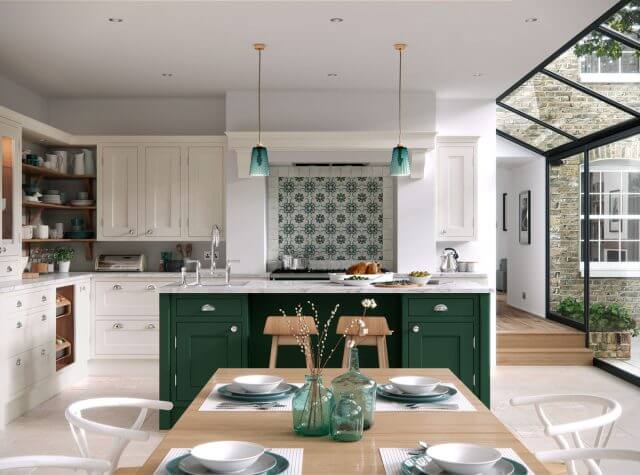
Start Your Project With Tolle Kitchens
We’ve helped hundreds of Yorkshire homeowners create open-plan spaces they love to live in. Whether you’re in the early stages of planning or ready to take the next step, we’d love to talk. Visit us at our Beverley showroom or our Halifax showroom, or book a discovery call at a time that suits you. We also serve clients across Leeds, Ilkley, Harrogate, Huddersfield, Wakefield, and beyond.
Your home deserves a kitchen that’s designed for the way you actually live. Let’s build it together.
Frequently Asked Questions
What should I consider when designing an open-plan kitchen?
The most important considerations are how the kitchen relates visually to the rest of the space, how you’ll define different zones without walls, how extraction and appliance noise will be managed, and how storage will keep the space looking uncluttered. Working with an experienced designer who understands the specific demands of open-plan living makes a significant difference to the outcome.
How do I separate kitchen and living areas in an open-plan space?
A kitchen island is one of the most effective ways to create definition between the cooking zone and the rest of the room. Changes in flooring, ceiling height, or lighting scheme can also subtly delineate areas without the need for physical barriers. The goal is for the zones to feel distinct but still flow naturally into one another.
Which kitchen styles work best in open-plan spaces?
It depends on the wider interior and architecture of your home. Contemporary handleless kitchens work beautifully in modern or transitional spaces. Classic Shaker or in-frame kitchens suit period properties, rural settings, or interiors with more traditional character. The most important thing is that the kitchen style feels cohesive with the rest of the room which is why we always design the kitchen in the context of the whole space.
Does Tolle Kitchens serve customers across Yorkshire?
Yes. We have showrooms in Beverley and Halifax and work with clients across Yorkshire, including Leeds, Ilkley, Huddersfield, Wakefield, Harrogate, Hebden Bridge, and the surrounding areas. Wherever you are in the region, our design and project management team can support your project from start to finish.
How long does an open-plan kitchen renovation take?
Timescales vary depending on the scope of the project. If structural work is involved removing walls, altering roof structures this will extend the overall programme. A typical kitchen installation with Tolle Kitchens, once orders are placed, takes between 8 and 14 weeks. Your dedicated project manager will provide a clear timeline and keep you updated throughout.