 Skip to content
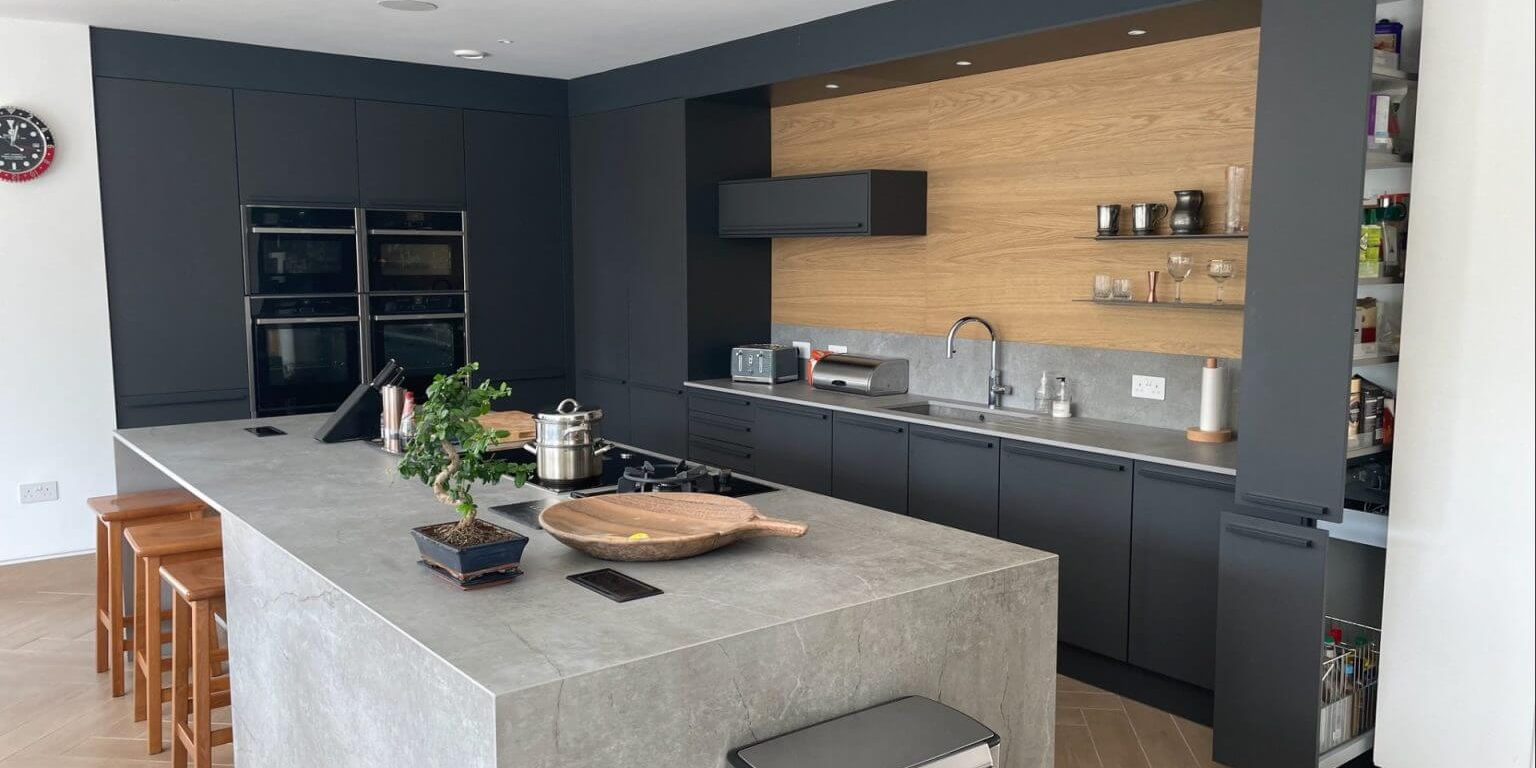
It’s one of the most commonly overlooked aspects of kitchen design and one of the most transformative. Lighting has the power to make a beautifully designed kitchen feel truly extraordinary, or to quietly undermine it. Get it right, and your kitchen becomes a space that shifts seamlessly from a bright, practical workspace in the morning to a warm, atmospheric setting for evening entertaining. Get it wrong, and even the finest cabinetry and finishes can feel flat.
At Tolle Kitchens, lighting is an integral part of the design process from the very beginning not an afterthought. Here, we explore the principles of layered kitchen lighting and how to use them to create a space that looks and performs at its very best.
What Is Layered Lighting?
Layered lighting is the practice of combining different types of light sources within a single space to serve different purposes. Rather than relying on one overhead fitting to do all the work, a layered approach creates depth, dimension, and versatility. In the kitchen a room that needs to function as both a practical workspace and a social space this is particularly important.
The three core layers are ambient lighting, task lighting, and accent lighting. Each plays a distinct role, and the most successful kitchen designs use all three in harmony.
Ambient Lighting: The Foundation
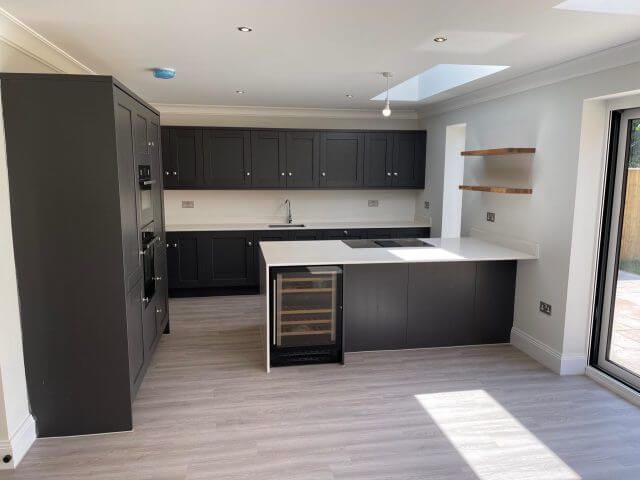
Ambient lighting is your base layer the general illumination that fills the room and sets the overall tone. In a contemporary kitchen, this is often achieved through recessed ceiling downlighters, which offer a clean, unobtrusive look that complements handleless cabinetry and minimalist design. Alternatively, a statement pendant or a series of pendants above an island can serve as the primary ambient source while also adding visual interest.
The key consideration with ambient lighting is colour temperature. For kitchens, a neutral to warm white typically between 2700K and 3000K tends to work well, flattering both the materials and the people in the space. Harsh, cool lighting can make even beautiful cabinetry feel clinical.
Task Lighting: Form With Function
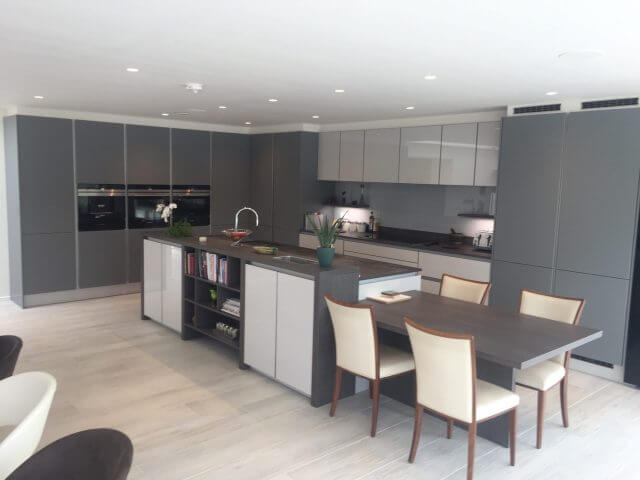
Task lighting serves a specific functional purpose: illuminating the areas where you actually work. Under-cabinet lighting is the most common form, casting direct light onto worktops and making food preparation safer and more comfortable. Integrated LED strips beneath wall units have become a standard feature in premium kitchen design, offering even, shadow-free light exactly where it’s needed.
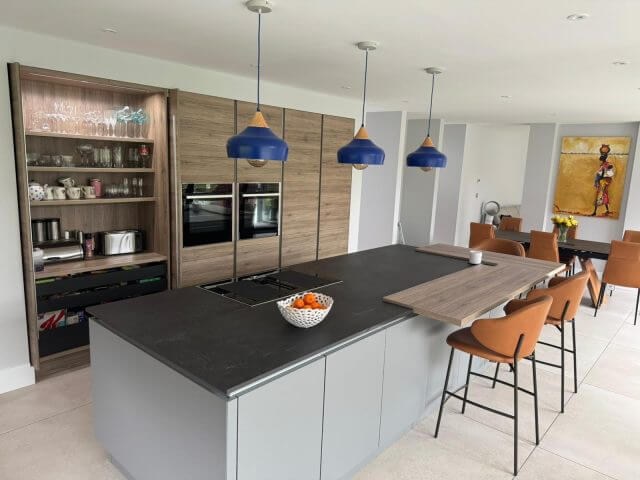
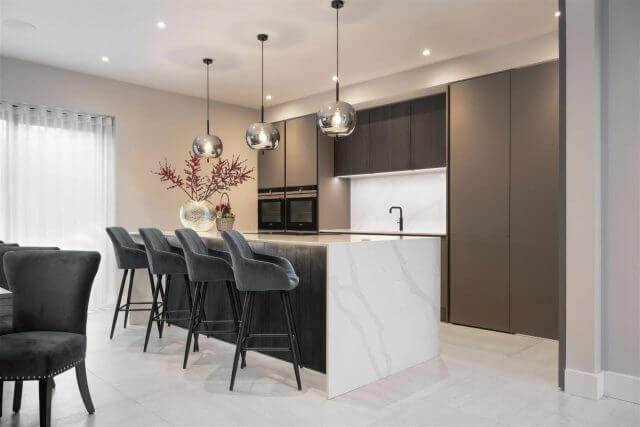
For island kitchens, low-hung pendants positioned directly above the worksurface serve a dual purpose they provide focused task lighting for cooking or socialising, whilst also anchoring the island visually and adding a strong design statement. The height and spacing of pendants above an island is worth discussing carefully with your designer, as proportions matter enormously here.
Zuma Lighting, available through Tolle Kitchens, offers a beautifully curated range of integrated and pendant lighting solutions specifically designed for luxury kitchens. Their products are engineered to complement premium cabinetry, with finishes and forms that feel considered rather than generic.
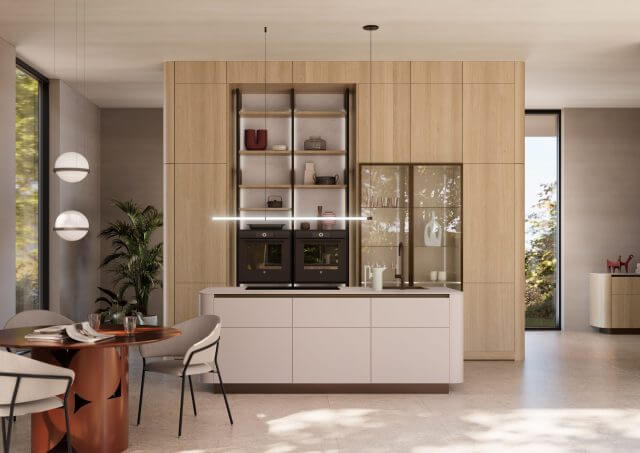
Accent Lighting: The Detail That Makes the Difference
Accent lighting is where personality enters the room. It’s used to highlight architectural details, showcase display elements, or add warmth and atmosphere beyond the purely functional. In a kitchen context, this might include:
Interior cabinet lighting to illuminate open shelving or glazed-door cabinets
Plinth lighting that creates a floating effect beneath base cabinets
Lighting within larder units or pantry spaces to highlight internal storage
Atmospheric lighting above or within alcoves and niches
These details are often subtle, but they elevate the overall feel of the space considerably. A kitchen that is lit only for function can feel workmanlike; one that uses accent lighting thoughtfully feels curated and complete.
Smart Lighting and Dimmability
One of the most valuable investments in any kitchen lighting scheme is a dimmer system. The ability to adjust light levels throughout the day and for different activities is what gives a layered scheme its full flexibility. Bright and energising for a busy weekday morning; soft and warm for a relaxed dinner with friends.
Increasingly, our clients are also integrating smart lighting control as part of a wider home automation scheme. This allows light scenes to be pre-set and recalled at the touch of a button or a voice command making the kitchen not only more functional but genuinely a pleasure to use.
If this is something you’re considering, it’s important to plan for it early in the design process. Cable routes, switch positions, and compatibility between fittings all need to be factored in before installation begins. Our project managers work closely with electricians and other trades to ensure that the technical side is handled seamlessly alongside the design.
Lighting and Open-Plan Living
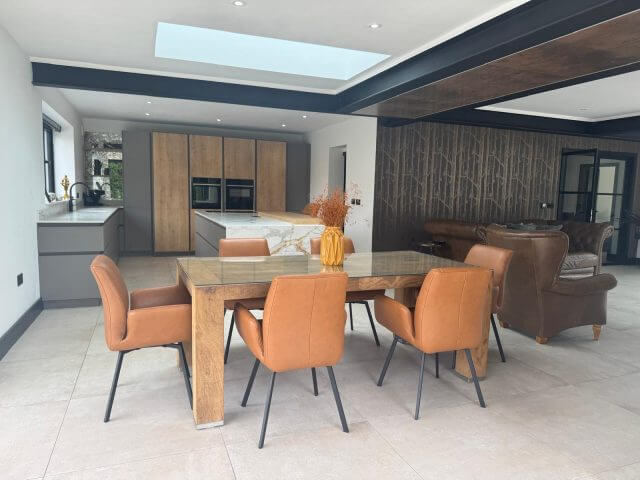
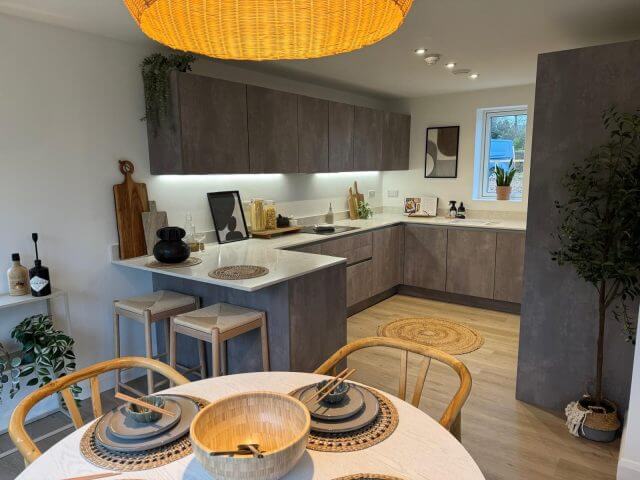
For kitchens that open into living or dining areas a layout we work with frequently at Tolle Kitchens lighting zoning becomes an important consideration. Being able to illuminate the kitchen independently from the adjacent space gives you much greater control over the atmosphere and allows the kitchen to ‘disappear’ when not in use, or to become the focal point when entertaining.
In open-plan settings, the visual consistency of lighting styles and finishes across the whole space also matters. Choosing fittings and a colour palette that works cohesively throughout the room rather than treating the kitchen and living area as separate creates a far more resolved, considered result.
Whether you’re planning a full renovation or simply rethinking your existing kitchen layout, our design team would be delighted to discuss your lighting vision. Visit our gallery for inspiration, or book a visit to one of our showrooms to see layered kitchen lighting in action.
Frequently Asked Questions
What is the best type of lighting for a kitchen?
The most effective kitchen lighting uses a layered approach combining ambient lighting (general illumination), task lighting (focused light for work surfaces), and accent lighting (atmospheric or decorative elements). No single type of light source can do all three jobs well, which is why layering is so important.
Should kitchen lights be warm or cool?
For most kitchens, a neutral to warm white colour temperature (2700K-3000K) is ideal. It’s flattering to both materials and people, creates a welcoming atmosphere, and works well across different times of day. Very cool or blue-white light can feel harsh and uninviting in a domestic setting.
Where should under-cabinet lighting be positioned?
Under-cabinet lighting should be positioned towards the front of the cabinet base to ensure light falls directly onto the worksurface rather than the wall behind. An integrated LED strip works well for consistent, shadow-free coverage across the full length of the worktop.
Can Tolle Kitchens help with kitchen lighting design?
Yes. Lighting is an integral part of our design process, not an add-on. Our design team will discuss your lighting requirements as part of your overall kitchen design consultation, and our project managers coordinate with electricians and other trades throughout the installation. We also supply Zuma Lighting a premium range of kitchen-specific lighting solutions.
How do I plan for smart lighting in my kitchen?
Smart lighting needs to be planned for early in the design process, before installation begins. Cable routes, switch positions, and the compatibility of fittings with your chosen smart home system all need to be considered. Raise this with your designer at the outset and your project manager will factor it into the overall project plan.